Loan consolidation and refinancing are two popular financial strategies that borrowers can utilize to manage their debt. Understanding the differences between these two options can significantly impact your financial health.
Loan Consolidation: Overview and Benefits
Loan consolidation involves combining multiple loans into a single loan. This process is often applied to student loans, personal loans, or credit card debts. One of the main benefits of consolidation is improved manageability. Rather than juggling multiple monthly payments and due dates, borrowers can simplify their finances by making a single payment.
With loan consolidation, borrowers may also benefit from a lower interest rate, especially if they are consolidating high-interest debts. For individuals with varying loan terms, consolidation can extend repayment periods, which might lower monthly payments. Moreover, some consolidation programs offer options for deferment, forbearance, and income-driven repayment plans, providing additional flexibility during financial hardships.
One commonly utilized type of loan consolidation is through federal student loans. The Direct Consolidation Loan program allows borrowers to combine multiple federal student loans. This can make it easier to manage payments and gain access to borrower benefits like income-driven repayment plans.
Refinancing: Overview and Benefits
Refinancing involves replacing an existing loan with a new one, ideally with better terms. Borrowers typically choose refinancing to lower interest rates, reduce monthly payments, or alter repayment terms. It can apply to various types of loans, including mortgages, auto loans, and personal loans. One primary goal of refinancing is to save money over the life of the loan by securing a lower interest rate.
When you refinance, the lender assesses your creditworthiness and financial situation. If your credit score has improved since taking out the initial loan or if market interest rates have dropped, you may qualify for more favorable terms. Refinancing also allows you to change the duration of your loan. For instance, switching from a 30-year mortgage to a 15-year mortgage can save you on interest payments in the long run, although it may increase your monthly payment.

Borrowers can also use refinancing to tap into home equity through cash-out refinancing. This allows them to access funds for various purposes, such as home improvements, debt repayment, or investment opportunities.
Key Differences Between Consolidation and Refinancing
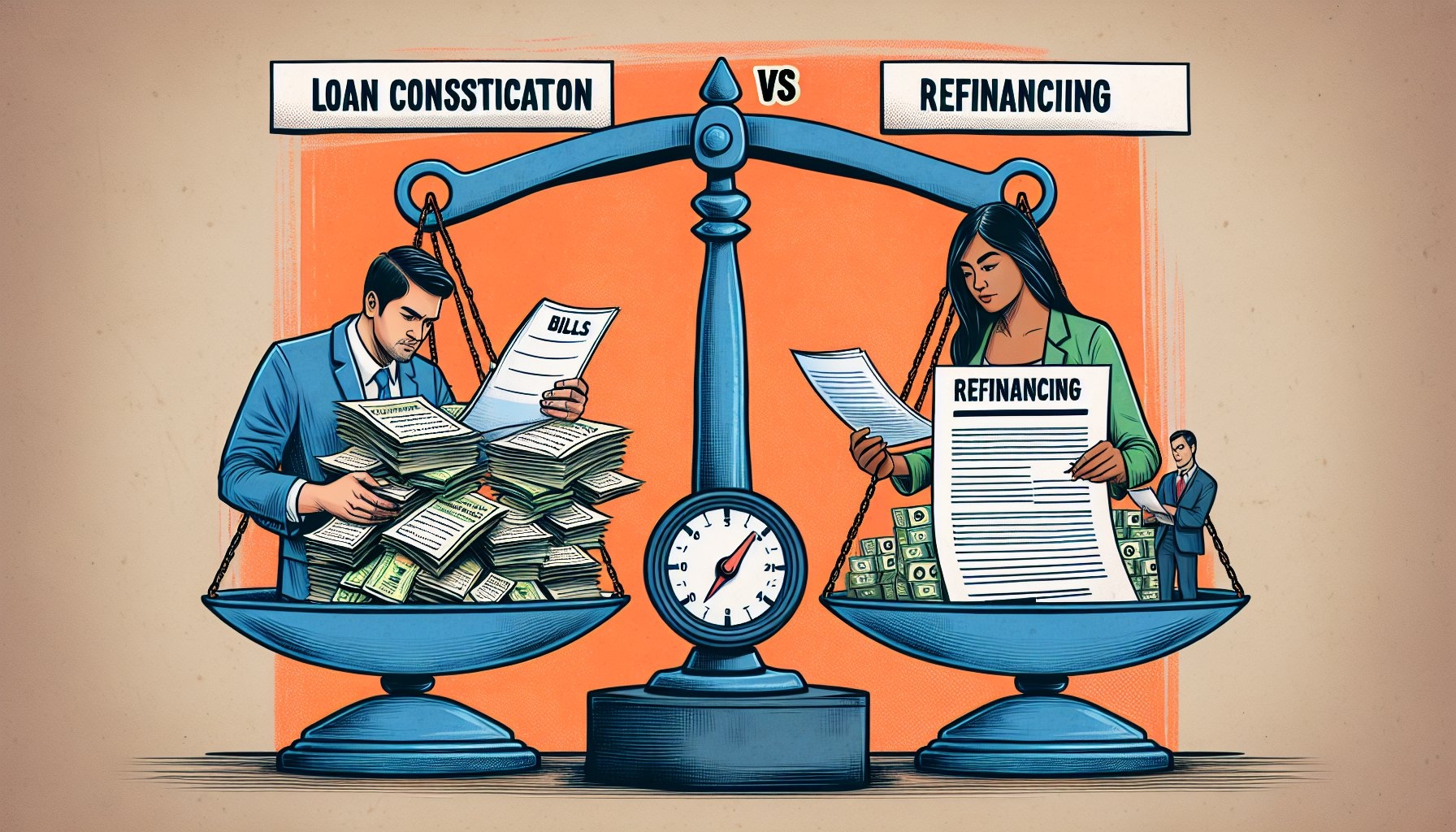
While consolidation and refinancing share some similarities, the core differences lie in their mechanics and intended outcomes. Consolidation combines multiple debts into a single loan, essentially focusing on streamlining payments and possibly obtaining a lower interest rate. In contrast, refinancing is aimed at altering the terms of an existing loan, primarily to benefit from better statistical markers.
Consolidation may lead to longer repayment periods, which could mean lower monthly payments but more interest paid over time. Refinancing, depending on your financial strategy, may commit you to a shorter repayment period, potentially resulting in higher monthly payments but lower total interest costs.
Choosing the Right Option for You
Selecting between consolidation and refinancing requires an assessment of your financial landscape. If you are overwhelmed with several high-interest loans and struggle to keep up with multiple payments, consolidation might be the right choice. It offers the simplicity of having one payment at a potentially lower rate, ultimately making debt more manageable.
On the other hand, if you have a single loan, such as a mortgage, and are looking to decrease your interest rate or alter the loan term, refinancing could suit your needs better. Accurately evaluating your credit standing, current interest rates, and financial goals will dictate the best choice.
Conclusion
In deciding whether to consolidate or refinance, consider your debts, current financial status, and future goals. A thorough understanding and analysis of both options can lead to a more informed decision, helping you achieve better financial stability. Remember to comparison shop and explore your options thoroughly before committing to either path.