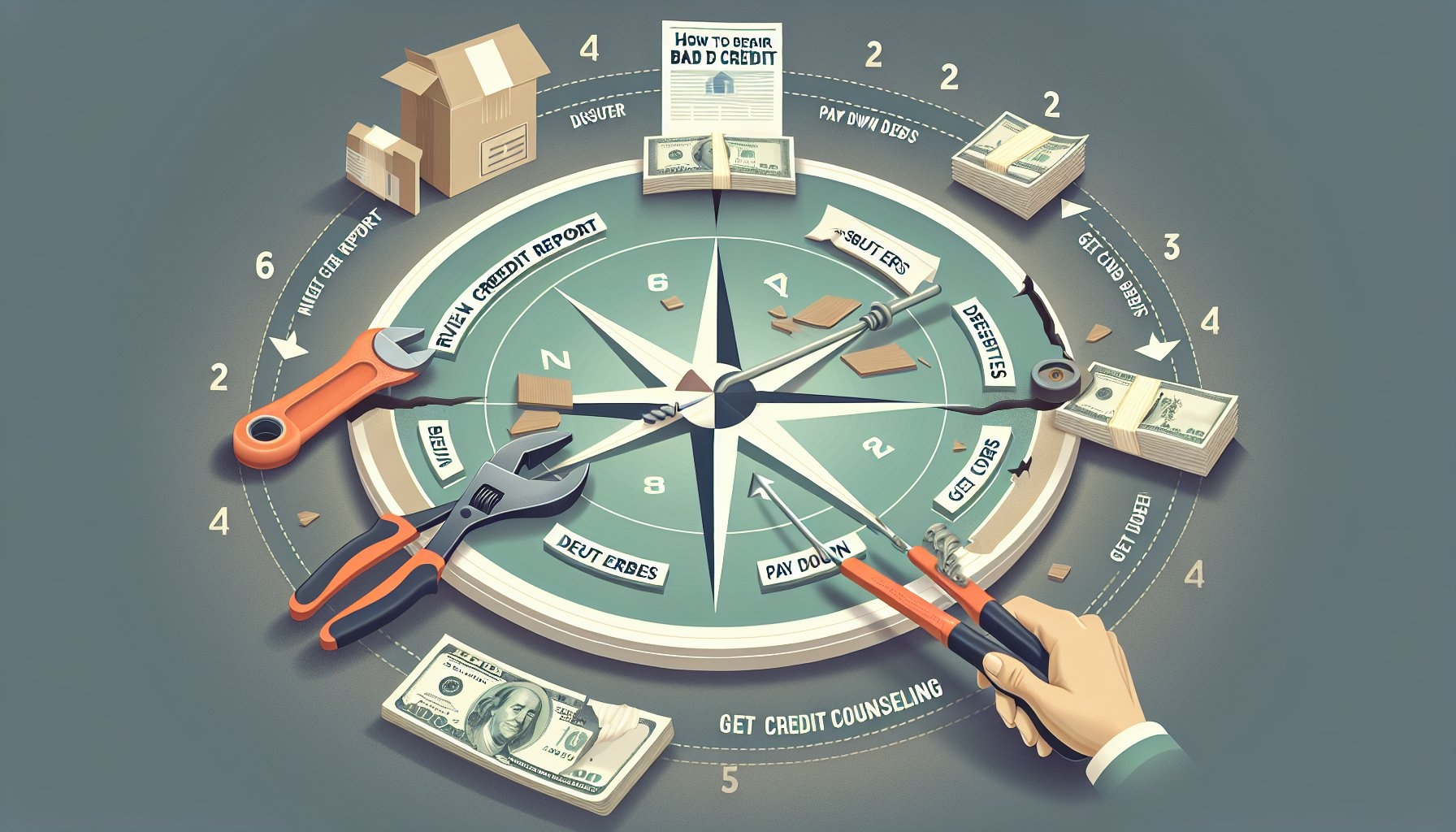
How to Repair Bad Credit: A Step-by-Step Guide
1. Understand Your Credit Situation: The Foundation for Recovery
Before embarking on any credit repair journey, you need a clear and accurate picture of your current credit standing. This involves obtaining and thoroughly reviewing your credit reports from all three major credit bureaus: Experian, Equifax, and TransUnion. You are entitled to a free credit report from each bureau annually through AnnualCreditReport.com.
- Obtain Your Reports: Visit AnnualCreditReport.com and follow the instructions. Be sure to request reports from all three bureaus, not just one.
- Review for Errors: Carefully scrutinize each report, line by line. Look for inaccuracies such as incorrect personal information (name, address, Social Security number), accounts that aren’t yours, closed accounts listed as open, incorrect payment history, and duplicate debts. Even seemingly minor errors can negatively impact your score.
- Identify Negative Items: Besides errors, note all negative items, including late payments, collections accounts, charge-offs, repossessions, foreclosures, and bankruptcies. Understand the type of debt, the creditor, the date of the event, and the amount owed (if applicable).
- Understand Scoring Models: Familiarize yourself with the factors that influence your credit scores. FICO and VantageScore are the most commonly used models. Understanding these factors allows you to prioritize your repair efforts. Payment history typically carries the most weight, followed by amounts owed, length of credit history, new credit, and credit mix.
2. Dispute Inaccurate Information: Challenging the Negatives
The Fair Credit Reporting Act (FCRA) gives you the right to dispute inaccurate or incomplete information on your credit reports. This is a crucial step in credit repair.
- Gather Documentation: Collect any documents that support your dispute, such as payment records, court documents, or correspondence with the creditor. The stronger your evidence, the better your chances of a successful dispute.
- Write Dispute Letters: For each error, write a separate dispute letter to each credit bureau. Your letter should clearly identify the specific error, explain why it’s inaccurate, and provide supporting documentation. Keep a copy of each letter for your records.
- Send Disputes via Certified Mail: Send your dispute letters via certified mail with return receipt requested. This provides proof that the credit bureau received your letter.
- Follow Up: The credit bureaus have 30 days to investigate your dispute. They will contact the creditor or data furnisher to verify the information. If the information is found to be inaccurate, the credit bureau must remove or correct it.
- Review Results: Once the investigation is complete, the credit bureau will send you a notice of the results. Review the results carefully. If you disagree with the outcome, you have the right to appeal.
3. Negotiate with Creditors: Settling Debts for Less
If you have legitimate debts that are negatively impacting your credit, negotiation can be a powerful tool.
- Identify Debts for Negotiation: Prioritize debts that are relatively old and have a lower balance. These are often easier to negotiate.
- Contact the Creditor or Collection Agency: Contact the creditor or collection agency in writing, expressing your willingness to settle the debt for a lower amount.
- Offer a Lump-Sum Payment: Offer a lump-sum payment that is less than the full amount owed. A common starting point is 50% of the debt. Be prepared to negotiate.
- Get it in Writing: Before making any payment, obtain a written agreement from the creditor or collection agency that confirms the settlement amount and states that the account will be reported as “settled” or “paid in full.” Avoid agreements that state “paid as agreed” if you’re settling for less.
- Pay the Settlement Amount: Once you have a written agreement, make the agreed-upon payment. Keep a copy of the payment confirmation for your records.
4. Practice Responsible Credit Management: Building a Positive History
Repairing bad credit is not just about removing negative items; it’s also about building a positive credit history.
- Pay Bills on Time: This is the most important factor in your credit score. Set up automatic payments or reminders to ensure you never miss a due date.
- Keep Credit Utilization Low: Credit utilization refers to the amount of credit you’re using compared to your total available credit. Aim to keep your credit utilization below 30%, and ideally below 10%.
- Become an Authorized User: If you have a friend or family member with good credit, ask if you can become an authorized user on their credit card. This can help you build credit without having to apply for your own card.
- Consider a Secured Credit Card: If you have difficulty getting approved for a traditional credit card, consider a secured credit card. These cards require a security deposit, which typically serves as your credit limit. Use the card responsibly, and your credit score will gradually improve.
- Avoid Applying for Too Much Credit: Applying for multiple credit cards or loans in a short period can lower your credit score. Be selective about the credit you apply for.
5. Monitor Your Credit Regularly: Staying on Track
Credit repair is an ongoing process. It’s essential to monitor your credit reports and scores regularly to track your progress and identify any new errors or negative items.
- Sign Up for Credit Monitoring Services: Several credit monitoring services provide alerts when there are changes to your credit reports.
- Check Your Credit Reports Regularly: Even if you’re using a credit monitoring service, it’s still a good idea to check your credit reports from all three bureaus at least once a year.
- Stay Patient and Persistent: Credit repair takes time and effort. Don’t get discouraged if you don’t see results immediately. Stay patient, persistent, and committed to your goals, and you will eventually see your credit score improve.